

In this article
- Name the task behind the query
- Inspect the results in the relevant context
- Compare two similar queries
- Write the brief around unanswered decisions
- Test the page against the task
A product description and a product comparison can target similar words while helping completely different readers. If you choose the wrong format, polishing the wording will not fix the mismatch.
To identify search intent, ask what the searcher is trying to accomplish, then examine the current results for evidence of the expected page type and answer. Treat that evidence as a starting hypothesis, not a promise of rankings.
My tutorial contrasts location questions, factual questions, purchases and reviews. The useful lesson is to recognise the task before planning the content.
Name the task behind the query
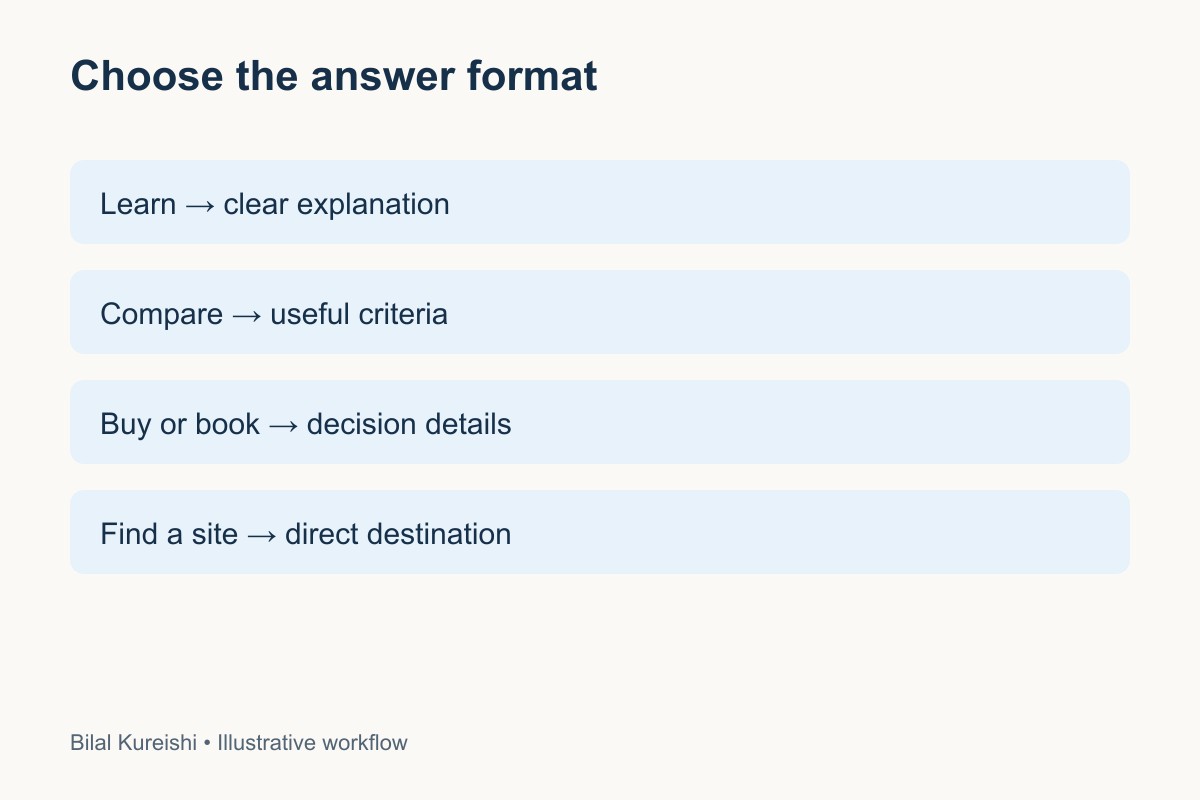
The familiar intent labels help organise your thinking: informational searches seek an answer, navigational searches seek a destination, commercial investigation compares options, and transactional searches seek an action. The boundaries are not always clean.
A question beginning with “where” can ask for factual information, directions or a business location. Do not classify it solely from one word. Write the likely task in ordinary language: “Find the correct entrance” is more useful than simply “informational”.
Inspect the results in the relevant context
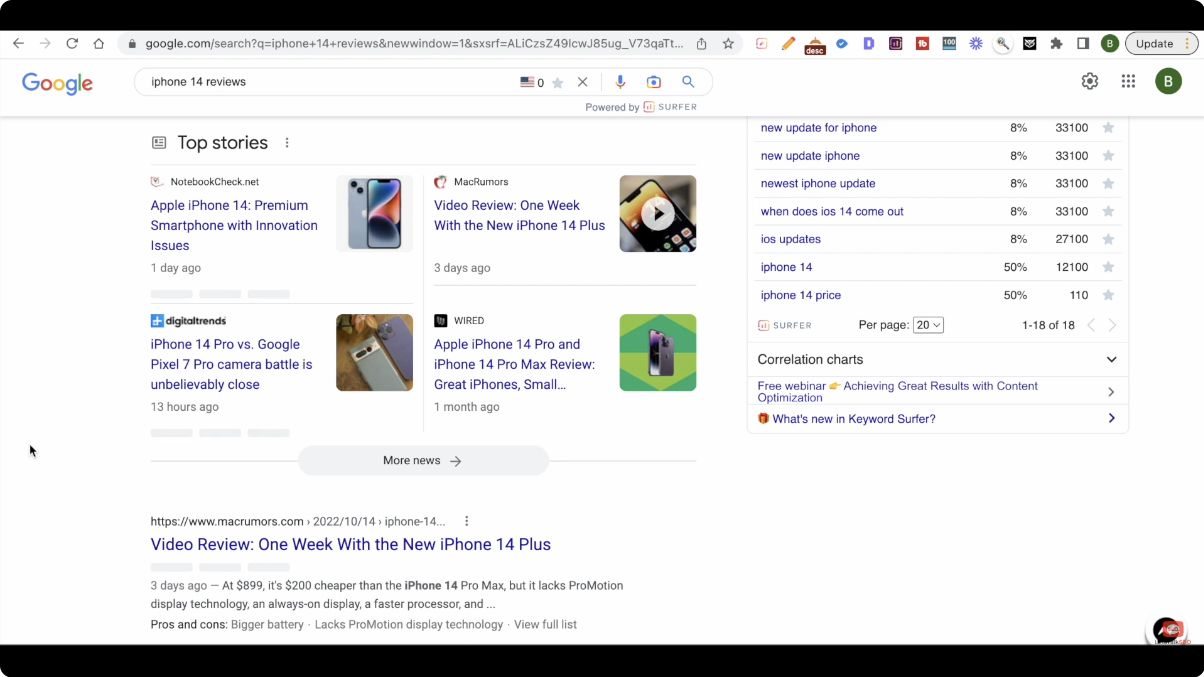
Search in the market and language you actually serve. Record the date and relevant location context. Read several organic results and distinguish them from advertisements, maps, shopping features and other result types.
Look for recurring formats: service pages, product pages, comparisons, videos, recipes or explanatory guides. Open the pages and check what the first screen delivers. The result title alone can conceal a page’s real purpose.
Mixed results are meaningful. They may show several plausible needs. Decide which one your page can satisfy, rather than stretching a single article to cover every possibility. The absence of a local competitor does not establish that Google will prefer your local website.
Compare two similar queries
| Illustrative query | Likely task to test | Information the page needs |
|---|---|---|
| Buy a specific phone in Dubai | Complete a purchase | Availability, price, model details and purchase route |
| Review of that phone | Evaluate suitability | First-hand evidence, strengths, limitations and alternatives |
| Where is a Dubai landmark? | Locate a place | Direct location answer and useful visitor information |
These examples develop the distinctions in the video. They are not a claim about today’s exact results. A review can link to a shop, but an affiliate link cannot substitute for useful evaluation.
Write the brief around unanswered decisions
Put the direct answer early. Then organise the necessary detail in the order a reader needs it. For a service page, that may mean scope, suitability, process, evidence and contact. For a tutorial, it may mean prerequisites, steps, examples and troubleshooting.
Study competing headings to understand common questions; do not copy their wording or imitate their H2 count. Google’s people-first content guidance stresses usefulness and original value. Your structure should reflect your own answer and evidence.
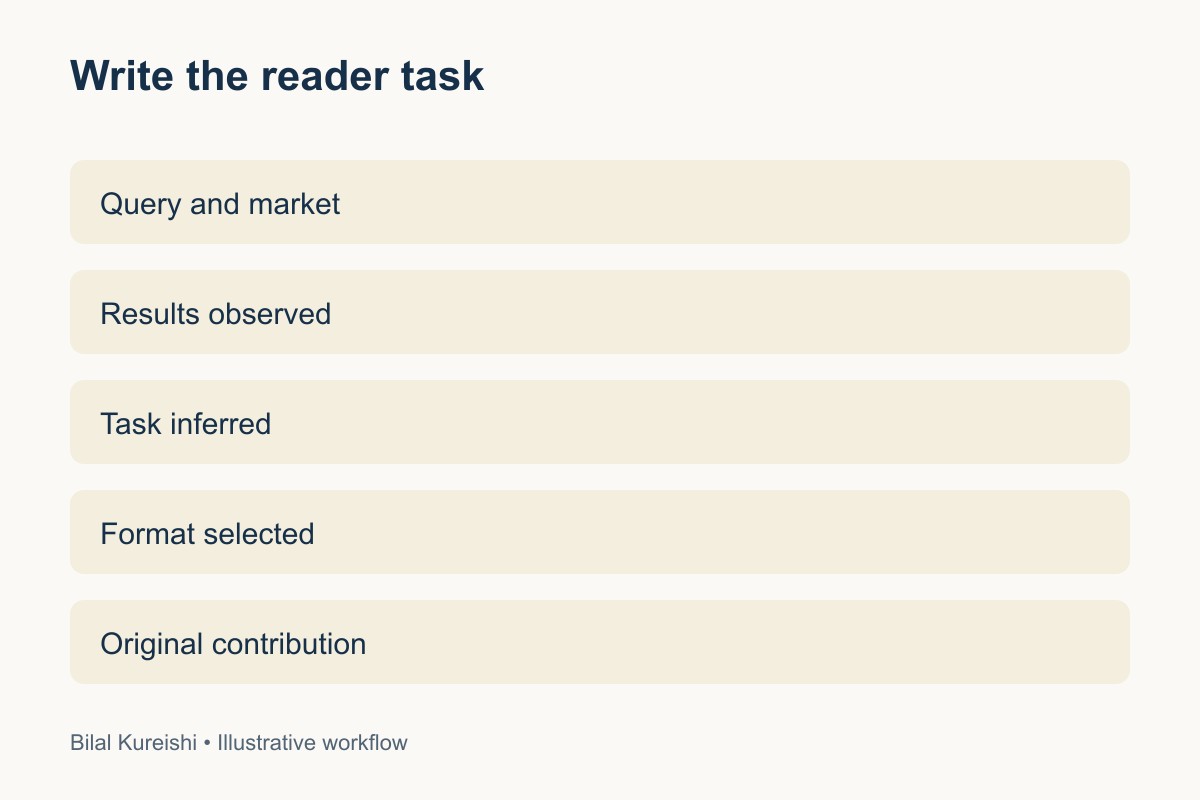
- State the reader and task in one sentence.
- Specify the answer the opening must give.
- List decisions or steps the page must support.
- Identify original evidence and its limitations.
- Choose relevant contextual links and a proportionate next step.
Test the page against the task
Read the draft as someone who knows little about the business. Can they do what brought them here? Does the page answer the question or merely repeat the keyword? On a phone, can they find the important detail without navigating around an oversized introduction?
After publication, compare reported queries with the page’s purpose. Use my Search Console content-gap guide to investigate mismatches. If visits arrive but enquiries do not, review the journey from rankings to leads too.
Can one page satisfy more than one intent?
Sometimes, when the tasks form a coherent journey. A service page can answer a few buying questions. A general definition and a detailed purchasing comparison may need separate resources. The relationship matters more than the label.
Choose one target query and write the task before the headline. That single sentence should guide every section in your brief.
Watch the original tutorial
Watch the original Let’s Talk SEO video. This guide develops the source ideas with updated caveats; the tables are editorial illustrations, not client results.
Written by Bilal Kureishi. Explore more SEO guides.