

In this article
- Begin with an offer, not a broad keyword
- Collect candidates and keep their context
- Separate ideas, volume and forecasts
- Turn the car-wash example into a page map
- Choose the next page and review the result
Your keyword list is growing. Your content plan is not getting clearer. Buying another subscription will not decide which customers you want or what their next question is.
You can start keyword research without a paid SEO tool: collect customer language, inspect search suggestions and results, group related needs and map them to useful pages. Optional tools add evidence, but they do not make the decision for you.
In my original tutorial I use a car-wash example, a spreadsheet and Google’s research tools. Here is the workflow I would use to turn those observations into a manageable content plan.
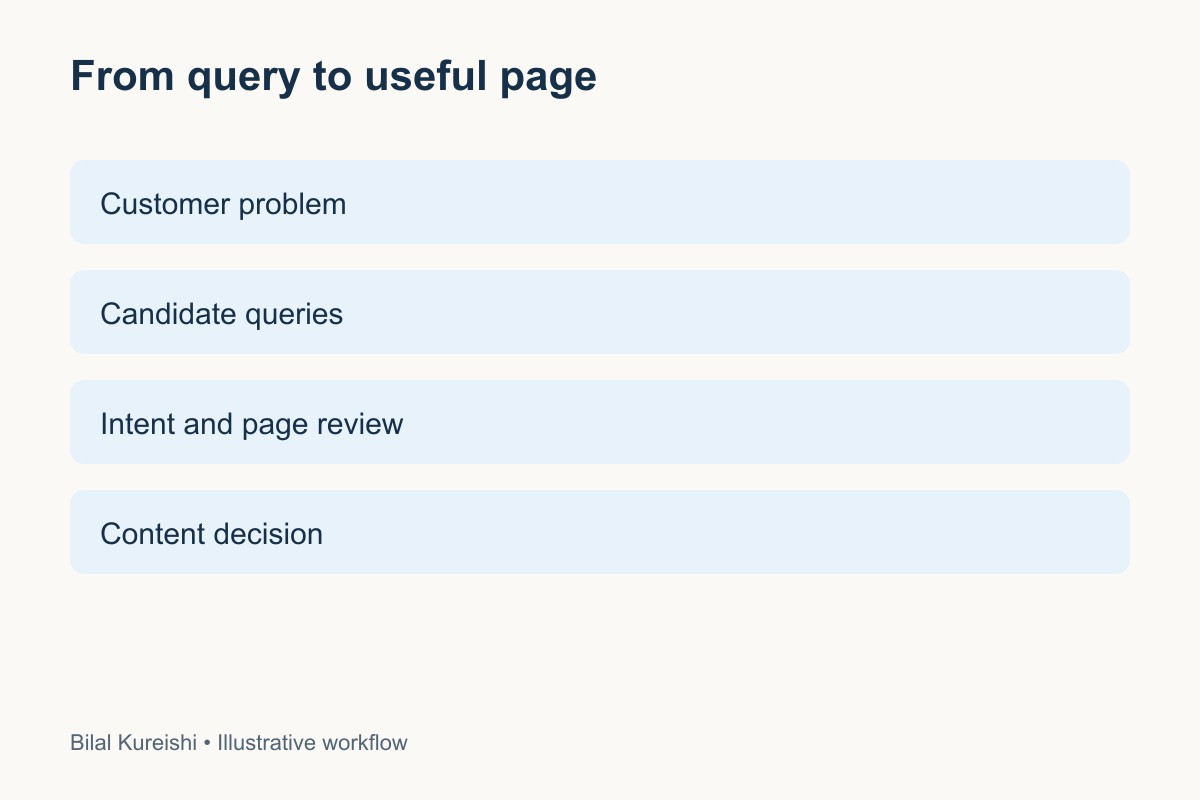
Begin with an offer, not a broad keyword
Write down what the business provides, who can buy it and where it can deliver. A local car-wash operator, an equipment seller and a product-review publisher all discuss car washing. They need different pages.
For each offer, list questions a customer asks before contacting you. Include practical constraints: availability, suitability, location, price factors and what happens next. Actual enquiry language is a stronger starting point than a random collection of popular phrases.
Collect candidates and keep their context
Type a seed phrase into Google and review the suggestions. Try a meaningful modifier such as a product type or location. Examine related questions where they appear. Record the phrase, date, country and why it might matter.
Suggestions are discovery clues. They are not a complete demand report. Google explains that autocomplete predictions depend on several inputs and policies. A suggestion does not establish a particular monthly volume.
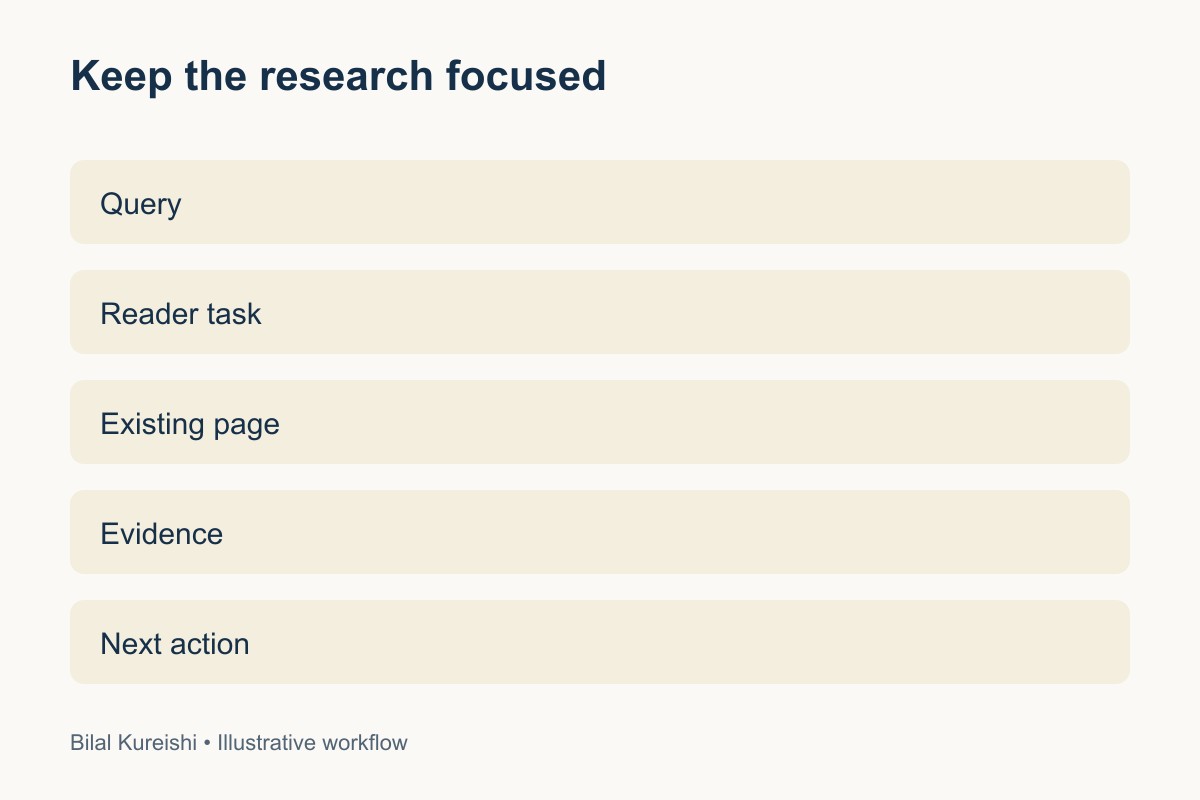
Use a spreadsheet with columns for query, customer task, page type, evidence, proposed destination and decision. Resist expanding every branch: a branded retailer query may have little value for an unrelated local service.
Separate ideas, volume and forecasts
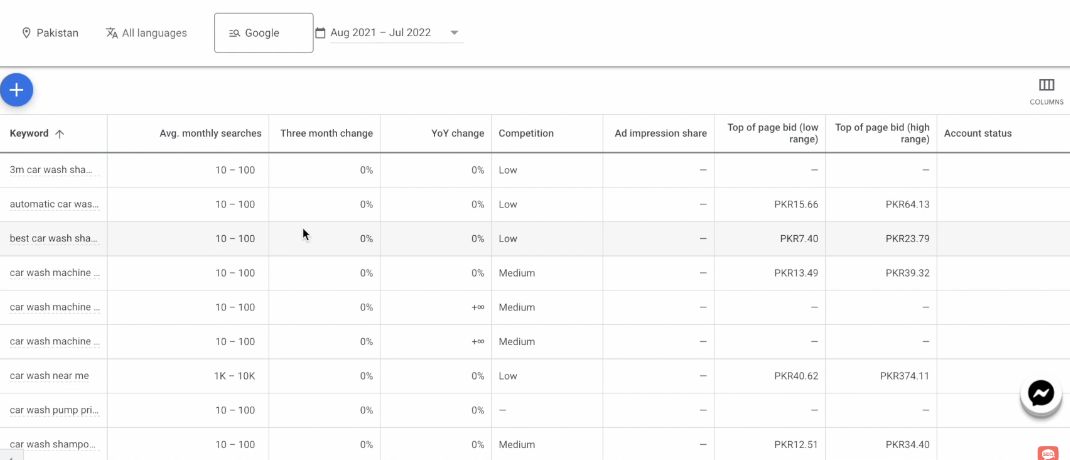
If you already have suitable Google Ads access, Keyword Planner can provide additional research. Check the country, date range and network settings before comparing figures. Access can require account setup and billing information; you can complete the initial workflow without it.
The original video includes ad forecasts. Those need careful interpretation: Google’s metric definitions describe advertiser competition and forecast ad clicks. Neither tells you how easily an organic page will rank or how many organic visits it will receive.
Turn the car-wash example into a page map
| Candidate | Reader task | Possible destination |
|---|---|---|
| Car wash near me | Find a local provider | Accurate service/location information |
| Car shampoo comparison | Compare products | Evidence-led comparison |
| Pressure washer maintenance | Complete a task | Practical maintenance guide |
| Automatic car-wash equipment price | Evaluate equipment | Product/category information with relevant price factors |
This is an illustrative planning table, not a live search-volume or ranking report. Check current results before using any row. A local car-wash operator need not publish an equipment buying guide just because the phrase exists.
Choose the next page and review the result
Read the current results for your strongest candidates. Note the dominant page types, the answers readers need and the evidence you can contribute. Then compare the proposed page with your existing inventory. Use my update-or-new-content framework when the topic overlaps an established resource.
Create one focused brief: audience, task, direct opening answer, essential sections, evidence and useful next step. Group equivalent phrases around that purpose rather than creating a separate page for every variation.
After publication, review relevant Search Console queries and real enquiries. My content-gap workflow helps turn reported questions into specific improvements. Keep a decision log so you know why a page was commissioned.
Do I need search-volume data before writing?
You need a defensible reason to publish. Useful customer questions, relevant search observations and a clear business fit can justify a focused resource even when volume estimates are missing. They still do not guarantee traffic.
Start with one service, collect ten worthwhile questions and map them to the pages you already have. If the priorities remain unclear, explore my SEO consulting.
Watch the original tutorial
Watch the original Let’s Talk SEO video. This guide develops the source ideas with updated caveats; the tables are editorial illustrations, not client results.
Written by Bilal Kureishi. Explore more SEO guides.