

In this article
- Clarify what “zero volume” means
- Start with the business question
- Collect corroborating clues
- Group needs without adding their volumes
- Run a proportionate test
Your research tool reports zero searches. Your customers keep asking the question. Should you trust the number or write the answer?
A zero-volume keyword can be worth targeting when it represents a relevant customer need and the page provides value beyond chasing a metric. Zero reported demand is a reason to investigate. It is neither proof of no audience nor a shortcut to easy rankings.
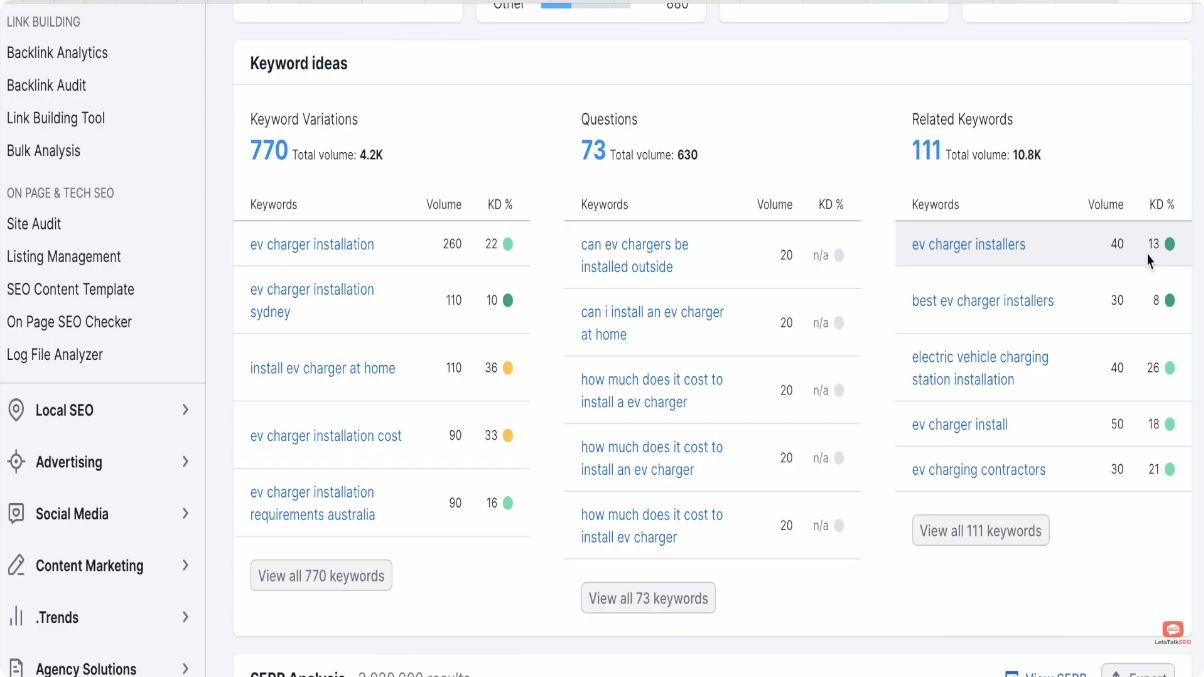
My video uses an EV-charger installation example in Australia. This guide keeps the useful decision process while avoiding the original ranking and conversion predictions.
Clarify what “zero volume” means
Record the tool, market, date and phrase associated with the figure. Missing data, a rounded estimate and zero reported searches are different observations. Do not silently combine them.
Even Google’s Keyword Planner documentation describes estimates and rounded statistics. Third-party reports have their own collection methods. Small or specialised audiences can be difficult to represent precisely.
That does not mean every zero-volume phrase has hidden demand. Some phrases are awkward, irrelevant or rarely used. Look for additional evidence before commissioning a new page.
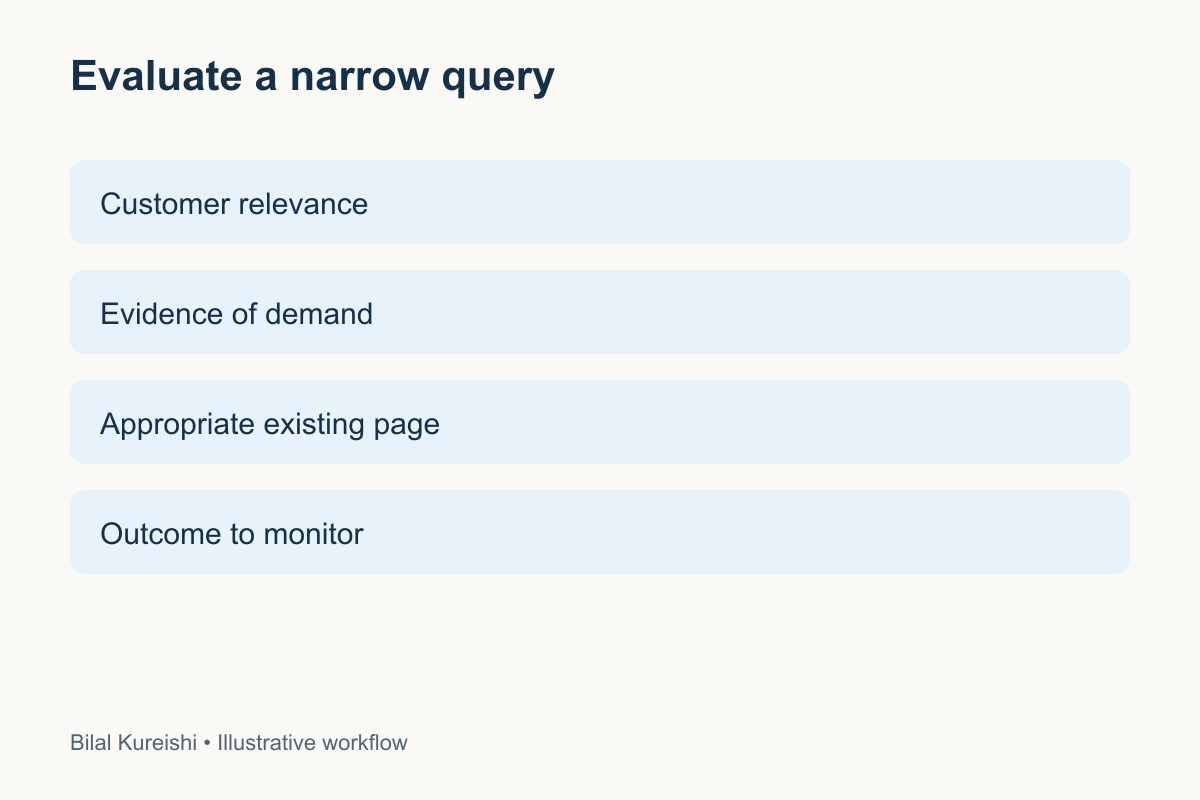
Start with the business question
In the EV example, distinguish someone buying charging equipment from someone hiring an installer. A question about installation cost can support a service decision; a question about becoming an installer serves a different audience.
Ask whether your business can help the searcher, whether you can answer accurately and whether the information has a natural place on the site. Specific customer questions often belong within an existing service page rather than a separate article.
Collect corroborating clues
Useful sources include enquiry records, sales conversations, site-search terms and relevant Search Console queries. Record what each source actually shows. A repeated sales question shows a customer information need; it does not directly measure Google demand.
Inspect current search results and related questions. Check the target country and language. A suggestion or question box is a clue, not a monthly visitor forecast. When the evidence is thin, a proportionate addition to an existing resource may be a better test than a large new article.
| Illustrative question | Editorial decision | Reason |
|---|---|---|
| What affects installation cost? | Add an accurate service-page explanation | Helps a prospective customer understand scope |
| Can a charger be installed in a garage? | Answer only with qualified, jurisdiction-appropriate expertise | Safety and technical details need authoritative input |
| How do I become an installer? | Usually outside the customer service page | Different audience and purpose |
The table is a content-planning illustration, not electrical advice or keyword data. Do not invent technical requirements to fill an FAQ.
Group needs without adding their volumes
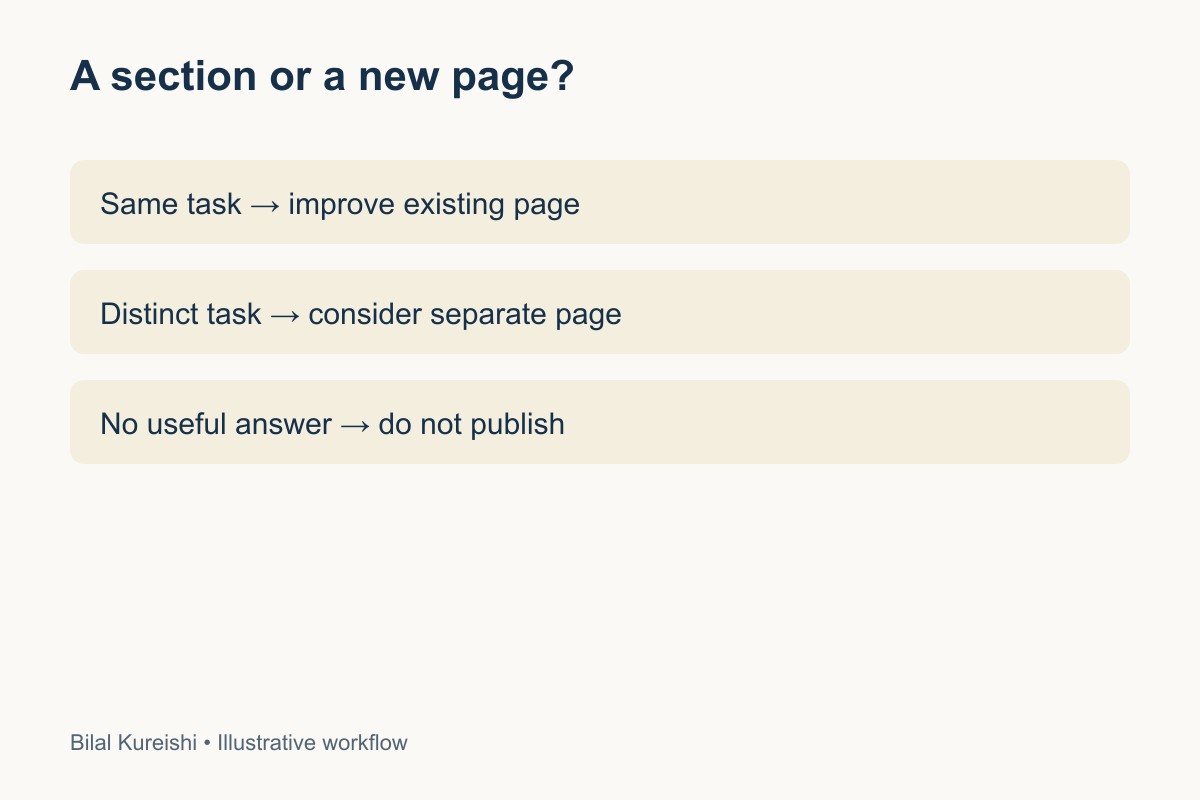
Several phrases can describe the same task. Group them around a useful answer and use natural language. Avoid multiplying pages or repeating each variation in every heading.
Do not add overlapping keyword estimates and call the total expected traffic. Impressions, clicks, visits and leads are different measures. No content score, word count or low difficulty rating guarantees a particular position or conversion rate.
Use my update-versus-new-content framework when deciding where the answer belongs. Link it from relevant passages using a clear internal-linking approach.
Run a proportionate test
Choose one relevant question. Save the evidence and reason for the edit, answer it with appropriate expertise, and record when the page changes. Check that visitors can find and use the answer.
Review reported queries and qualified enquiries over a suitable period. A small resource may earn its place by answering a recurring customer question even when its traffic remains modest. My rankings-to-leads guide helps keep the outcome in perspective.
Does this only work for service businesses?
No universal exclusion applies to ecommerce or other business models. A specialised product question can be useful too. Assess the audience, evidence and page purpose rather than deciding from the industry label alone.
Before rejecting the next zero-volume phrase, write down the customer it helps and the evidence for that need. If neither is clear, defer it.
Watch the original tutorial
Watch the original Let’s Talk SEO video. This guide develops the source ideas with updated caveats; the tables are editorial illustrations, not client results.
Written by Bilal Kureishi. Explore more SEO guides.