

In this article
- Check the market and expected page type
- Look for a useful gap rather than a missing phrase
- Use authority metrics with their limitations
- Make a decision you can explain
- Build a small test rather than promising a ranking
A tool labels a keyword “easy”. The results are filled with excellent specialist pages. Another term looks “hard”, but the ranking pages leave an important customer question unanswered. Which opportunity should you pursue?
Manual keyword-difficulty assessment means comparing the current results with what your site can realistically deliver. Review intent, competing pages, evidence, reputation and effort together. A score is one input, not the verdict.
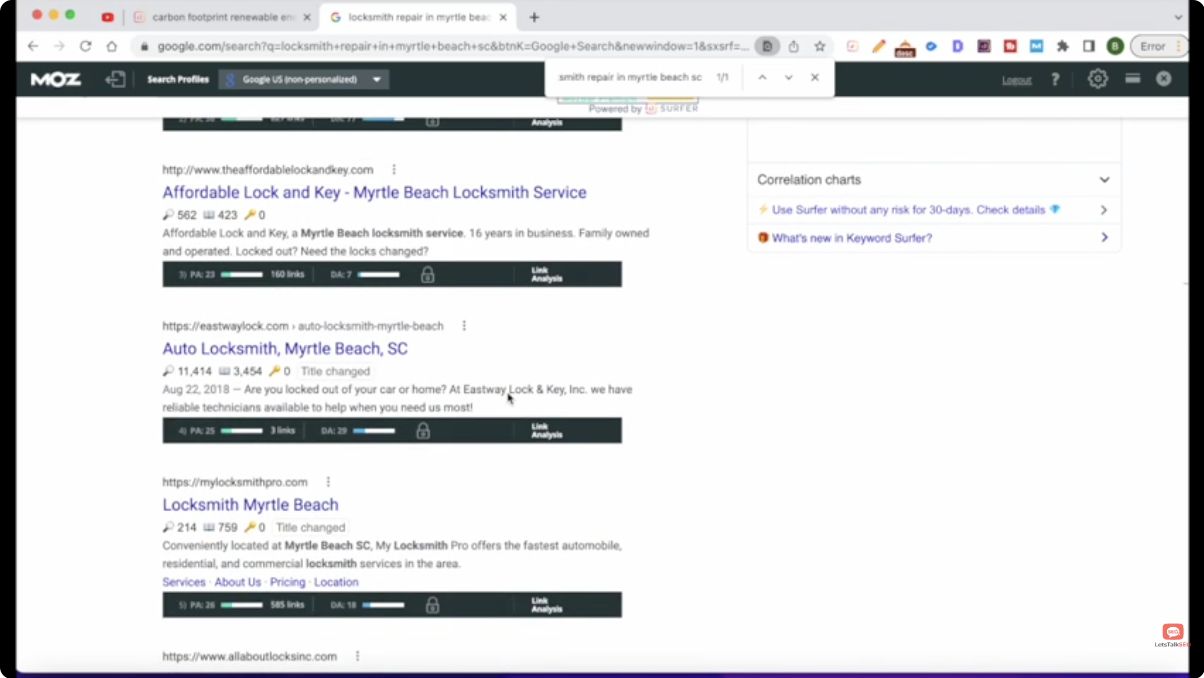
My video demonstrates a quick review of local locksmith and garage-door results. The process is useful; the old scores and ranking predictions should not be treated as current evidence.
Check the market and expected page type
Record the query, country, language, date and location context. Local searches need particular care: the results you see can differ from those a customer sees elsewhere.
Separate organic listings from maps and paid placements. Ask whether Google is showing local service providers, directories, articles or product pages. If your intended page type is missing, investigate why before committing a budget.
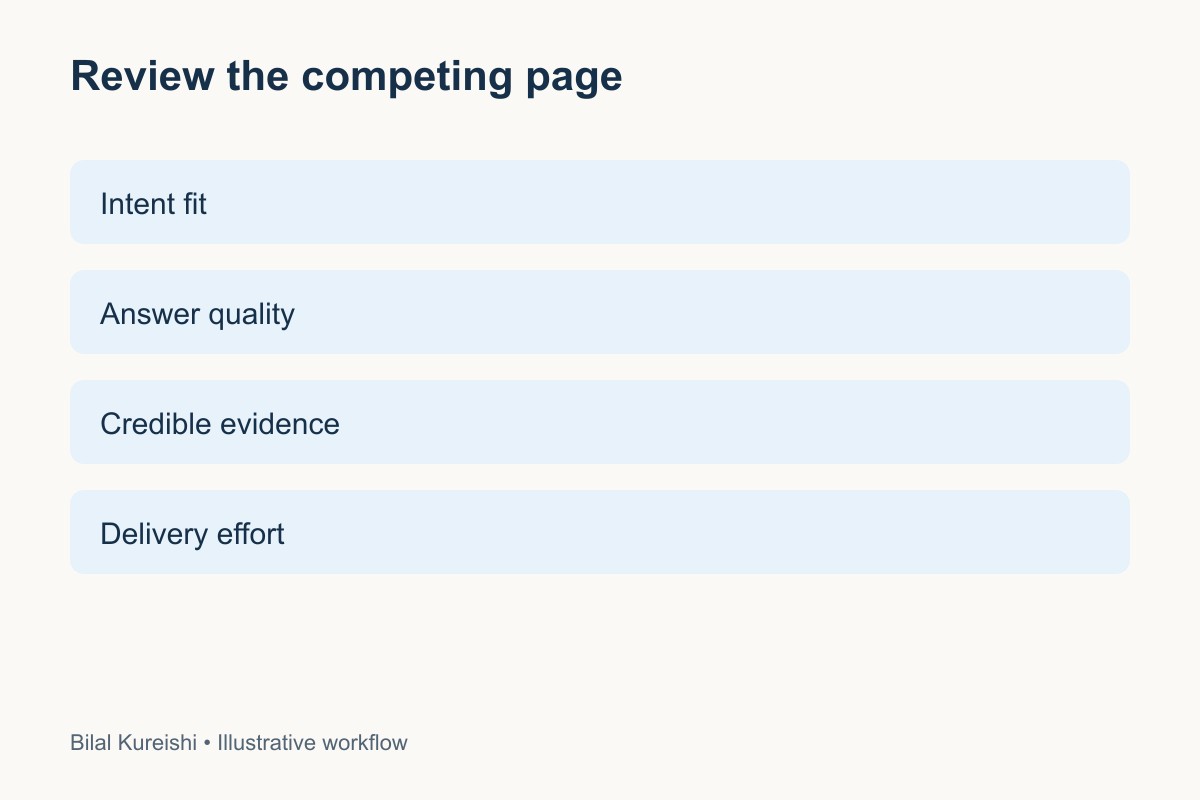
Open several competing pages. Write down what they let a customer do, which questions they answer and whether they provide credible evidence. Assess the complete page rather than deciding from the title alone.
Look for a useful gap rather than a missing phrase
An exact phrase absent from a title does not prove poor optimisation. A page may answer the need using different wording. Conversely, repeating the phrase in the title, URL and headings does not establish that a new page deserves to outrank it.
For a local service example, compare actual service coverage, availability information, scope, relevant proof and ease of contact. Do not invent competitor weaknesses or claim a private network of links from a backlink count.
My content-gap guide explains the distinction between a missing answer and a missing exact keyword. Apply the same reasoning to competition research.
Use authority metrics with their limitations
Link tools can help compare profiles when you have access. Record which provider and date supplied each metric. Domain-level and page-level measures describe different things, and backlink counts alone miss relevance and quality.
Ahrefs explains that its Domain Rating and similar scores are not established search-engine ranking factors. They can provide context; they cannot diagnose why a specific page ranks.
You can perform a useful first pass without buying metrics. Mark missing evidence as unknown and assess the visible content, offer and reputation. Avoid replacing uncertainty with a guess dressed up as a number.
Make a decision you can explain
| Observation | What it suggests | Next investigation |
|---|---|---|
| Strong specialist answers across the results | High content/evidence expectations | Can you add something genuinely useful? |
| Relevant service pages with unclear scope | Possible customer-information gap | Verify scope and assess the whole page |
| Low tool score but excellent pages | Score understates practical effort | Read competing resources and plan evidence |
| Different intent from your proposed page | Poor format fit | Change the brief or choose another target |
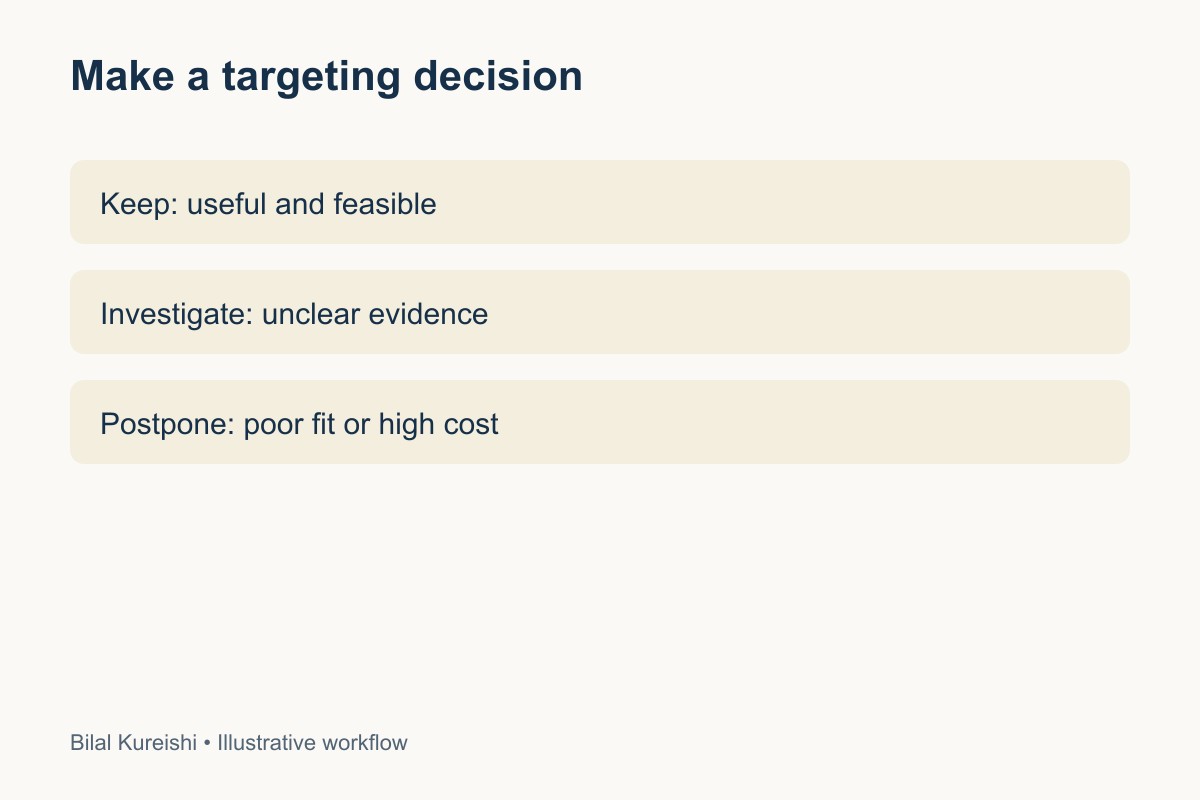
This worksheet is illustrative. It does not rate the video’s old examples as opportunities today. Record a decision such as “investigate”, “test”, or “defer”, with a reason and the resources needed.
Build a small test rather than promising a ranking
Choose one worthwhile topic. Set a page purpose and evidence plan, check whether an existing resource should be updated, and define the business outcome you want to measure. My content refresh framework can prevent unnecessary duplication.
When the page is ready, give it a sensible discovery path using contextual internal links. Keep a baseline and note publication and meaningful changes. Review outcomes over a suitable period; do not promise a result in a fixed number of days.
Is a quick SERP check enough?
It is enough to narrow a shortlist, not to approve a large investment. Important targets deserve a closer review of content, technical feasibility and the business case. For help prioritising that work, explore my SEO consulting.
Watch the original tutorial
Watch the original Let’s Talk SEO video. This guide develops the source ideas with updated caveats; the tables are editorial illustrations, not client results.
Written by Bilal Kureishi. Explore more SEO guides.